DMarket vs Skinport: Automation Speed or Zero Buyer Fees?
These are probably the two most-recommended non-Steam venues in CS2, and they earn it from opposite directions. DMarket is infrastructure: on-site inventory, instant settlement, target orders, and an API that bots live on. Skinport is retail: 0% buyer fees, a storefront your non-trader friend could navigate, and a curated feel that makes buying a skin feel like buying anything else online. Which one deserves your next purchase depends on which of those you're actually shopping for.
Same custody model, different souls
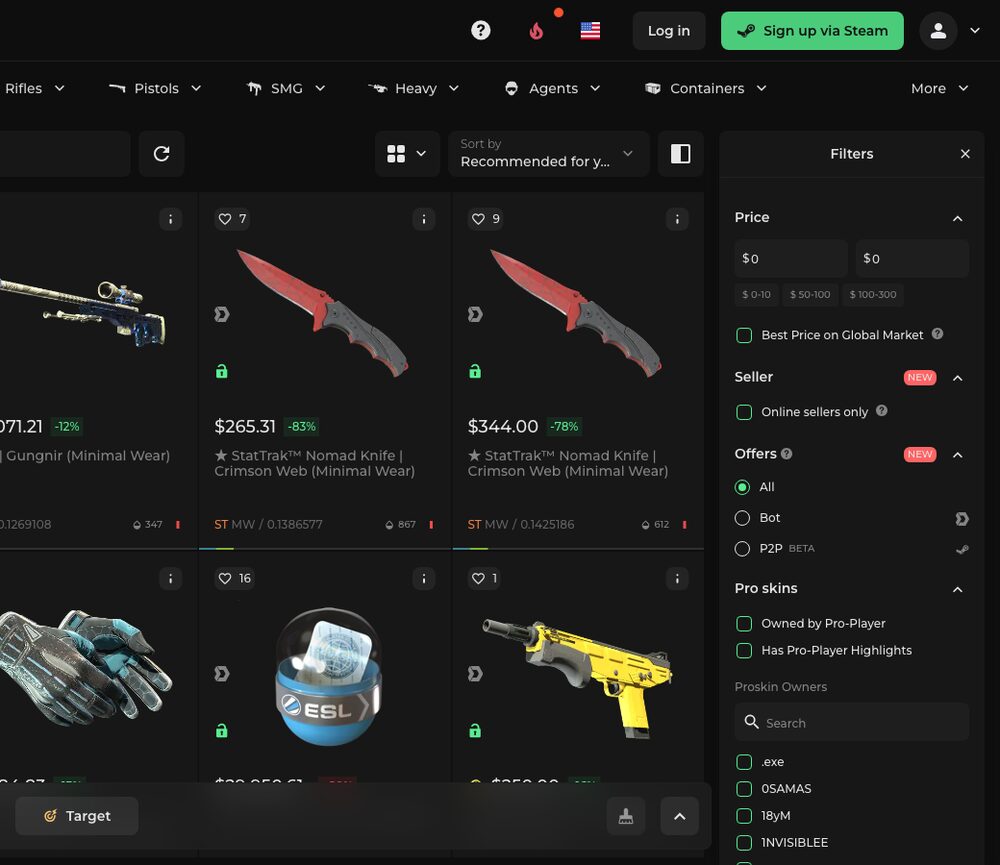
Structurally the venues are siblings: both run on-site inventory, meaning sellers deposit items first and your purchase settles instantly — no trade-offer waiting, no seller flakes. The divergence is everything built on top. DMarket exposes its depth: order books thick with cases and commodities, standing target orders that fill when a listing crosses your price, and a signed public API mature enough that fully automated buying is a first-class use case. Skinport hides its machinery: what you see is a clean catalog, strong photography, and a checkout flow optimized for a human with a card — deliberately more boutique than exchange. Neither posture is wrong. They're aimed at different buyers.
The fee math, both directions
At the time of writing, our cross-market table reads: DMarket card deposits ~2.35% + $0.25; Skinport 0% on the buyer's side, so your cost is sticker plus payment processing. Run it both ways on a $40 skin:
| DMarket | Skinport | |
|---|---|---|
| Sticker | $40.00 | $41.20 (typical — often lists slightly higher) |
| Funding cost | $1.19 (2.35% + $0.25) | ≈ $0 buyer fee (payment processing only) |
| Effective | ≈ $41.19 | ≈ $41.20 |
A coin flip — and that's the honest general finding. Skinport's 0% often gets balanced by slightly higher stickers (sellers price their commission in); DMarket's lower stickers get taxed on the way in, with the flat $0.25 punishing small deposits hardest. Neither venue systematically wins on price. The purchase is decided item by item, which is the recurring moral of effective-price thinking: compare totals, not fee tables.
Where DMarket pulls away
- You buy in volume. Case and commodity books are deeper; large orders fill without moving the price on yourself.
- You want standing orders. Target orders are a patient buyer's discount machine; Skinport has no equivalent.
- You automate. The API makes DMarket one of two venues (with SkinBaron) where a bot buys hands-off. If accumulation runs while you sleep, this decides it alone.
Where Skinport pulls away
- You buy occasionally, by hand. The storefront, search, and checkout are the least-friction human experience in CS2 — a real feature, not a cosmetic one.
- You hate deposit mechanics. No pre-funding a balance; you pay for the item you're buying, like a normal shop. (Details in our Skinport review.)
- You're the seller's buyer. Curation and presentation attract listings — especially mid-tier skins — that never appear on exchange-flavored venues.
Verdict: pick by workflow, not by winner
If your buying is a system — scheduled, scripted, volume-oriented — DMarket is built for you and Skinport will feel like shopping through a letterbox. If your buying is an occasional pleasure — one skin, chosen with your eyes — Skinport is built for you and DMarket will feel like operating a terminal. On pure price they trade wins daily, along with SkinBaron, CSFloat and the rest of the field: cross-market buying averages about 36% below Steam, and no single venue delivers that number alone. Our answer, predictably, is to stop choosing: check both — check everything — on every purchase, and let the item's actual cheapest home win. That's literally what the cs2stacker marketplace exists for — type the item once and see whether DMarket, Skinport, or an outsider holds today's lowest effective price, before a single dollar moves.