
The Instant-Sell Discount: Market Microstructure for CS2 Sellers
Every market with patient and impatient participants has a spread: the gap between what buyers are bidding right now and what sellers are asking. List a skin and wait, and you're earning the spread. Instant-sell, and you're paying it — crossing to the bid side where someone else already committed money. Understand who's standing on that side and the "mystery discount" becomes an ordinary price you can reason about.
Crossing the spread, in skin terms
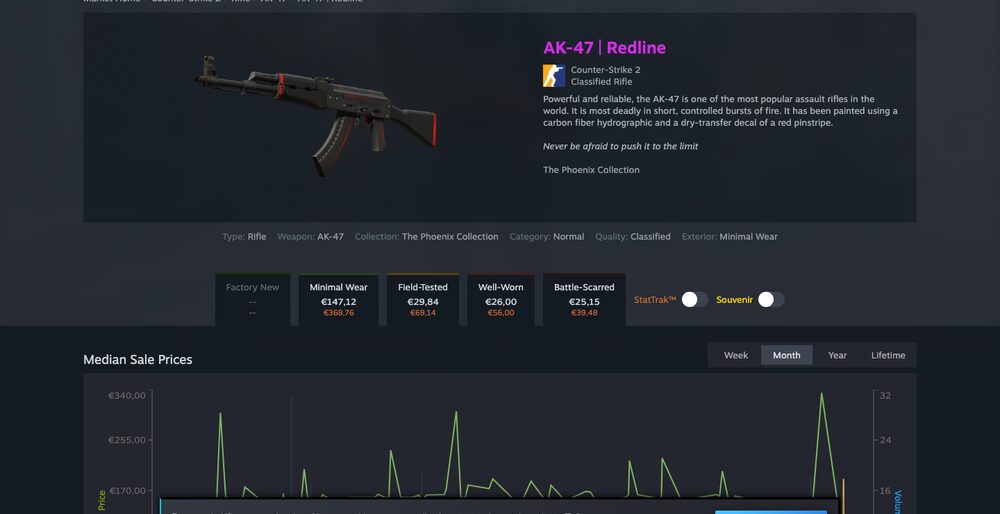
On any venue there are two prices for your item. The ask is the cheapest current listing — what a buyer pays to get it now. The bid is the highest standing offer — what a seller receives to dump it now. Patient sellers join the ask queue and wait; instant sellers hit the bid. The distance between them is the spread, and it's the exact same object as the discount on an instant-sell quote. Nothing about this is skin-specific — it's how every order-driven market works — but skins make it vivid because the spread on a rare float can be enormous while the spread on a liquid case is pennies.
Who is on the other side
Three kinds of counterparties keep bids alive. Venues and market-makers quote instant prices, take your item into inventory, and relist at the ask — their income is literally the spread. Standing buy orders from patient bargain hunters fill automatically when an impatient seller accepts their below-market bid; from their side of the table it's a sniping strategy, from yours it's exit liquidity. And resellers troll the cheap end of listings to flip underpriced items — the crowd documented in why sellers list below market and reselling sniped skins. All three are running the same business: buy impatience, sell patience.
Why the discount breathes
The spread isn't a constant — it's a live price of risk, and it widens exactly when you'd rather it didn't:
- Volatility. Whoever buys your item holds it until resale. In a calm week that holding risk is tiny; in a crash week, prices can move percent-per-hour, so every bidder pads their quote. Instant-selling into a crashing market means paying for speed and fear at once.
- Liquidity. A Kilowatt Case resells in minutes; a Battle-Scarred AWP with an odd sticker combo might sit for a month. The longer the expected holding period, the wider the bid backs off. Illiquid items can see instant quotes 20–30% under realistic listing value.
- Inventory risk concentration. When many sellers rush the exit at once — patch day, panic waves — bids get filled and pulled faster than they're replaced, and the remaining ones sit lower. The spread is worst precisely when the most people want to cross it.
Measuring the spread yourself
You don't have to take anyone's word for the gap — it's observable in about a minute. Find the cheapest current listings for your exact item across venues (that's the ask side); cs2stack's grid collapses that step to one search, returning the live low from each of 10+ venues at once. Then find what instant buyers or the top standing orders offer (the bid side). The percentage between them is today's spread for your item, and watching it for a few days teaches you its rhythm: tight after quiet weekends, gaping the hour a big update drops. Traders in conventional markets pay for this data; in skins it's free and almost nobody looks. The habit also immunizes you against the classic interface trick — a quote presented as "95% of market value" where "market value" turns out to be a stale or inflated reference number rather than the live ask.
Shrinking the haircut
You can't abolish the spread, but you choose where and when you cross it:
- Sell liquid items instantly, list illiquid ones. Speed is cheap where resale is easy. On slow items, the instant quote embeds weeks of someone else's holding risk — patience there pays disproportionately.
- Pick calm weeks. If nothing forces the timing, avoid crossing during event-driven volatility. The same item, same venue, can quote several points better seven days apart.
- Compare bids where the buyers are. The best bid for your item class lives where that class is most traded, and liquidity differs sharply by venue. A quote is only "the" price if you didn't check a second one.
- Half-cross with an aggressive ask. Listing slightly under the current cheapest ask often sells within hours — most of the speed of an instant-sell at a fraction of the discount. It's the seller's version of a limit order, and on liquid items it's usually the best point on the curve.
The one-line version
The instant-sell discount is the market's hourly rate for patience. Rent out yours when the rate is high (illiquid items, wild weeks) and buy speed when it's cheap (liquid items, calm weeks) — the decision scenarios are laid out in when instant-sell makes sense.