
Selling CS2 Skins Instantly: What Speed Really Costs
A patient listing waits for the right buyer; an instant-sell takes whatever buyer already exists. The first pays more, the second pays now. Instant-sell isn't a scam and isn't a gift — it's a price for speed, and like any price it's sometimes fair and sometimes terrible. This is how the mechanism actually works, and how to know which kind of day you're having.
What "instant" actually means
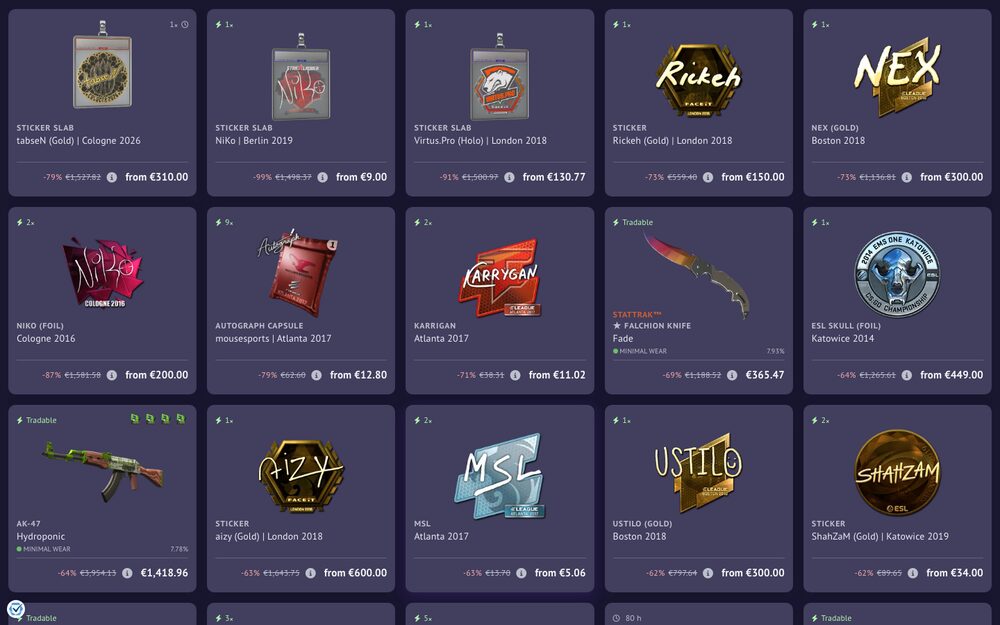
Instant-sell comes in two flavors that feel identical and price identically. Either the venue itself (or a partnered buyer) quotes you a price and takes the item into its own inventory, or your sale fills a standing buy order someone placed earlier at that price. Both settle in seconds; both pay below what a patient listing would fetch, because in both cases somebody else is providing the patience and charging for it. The everyday version is visible on any venue's discount sort: quick-sell listings are just sellers voluntarily pricing at the instant end of the book.
Where the liquidity comes from
The counterparty isn't a charity. Venues and market-makers who buy instantly plan to relist your item at the market price and pocket the spread. Buy-order snipers place standing bids below market precisely so impatient sellers fill them — from the other side of that trade, standing buy orders are the buyer's way of harvesting seller impatience. Once you see instant-sell as selling to a reseller, the discount stops being mysterious: it's their margin plus their risk of prices moving while they hold your item.
The size of the haircut
No single number is honest, so here's the honest shape. On liquid, high-volume items in calm weeks, instant quotes can sit within several percent of what a patient listing nets. On illiquid items — unusual floats, low-demand skins, anything a reseller might hold for weeks — the gap stretches to 15–30% or worse. And in volatile weeks it widens everywhere, because the reseller is pricing the risk that the market moves before they flip. The mechanics of that spread — who sets it, why it breathes — get a fuller treatment in the instant-sell discount explained.
| Situation | Instant-sell gap vs patient listing |
|---|---|
| Liquid item, calm market | Small — often single digits |
| Liquid item, volatile week | Noticeably wider |
| Illiquid item, calm market | Large — the reseller prices weeks of holding |
| Illiquid item, crashing market | Brutal — you're paying for speed and fear |
Before accepting any quote, benchmark it against what the item trades for across venues — not against Steam sticker, which flatters every quote by comparison. The benchmark takes one search on cs2stack's cross-market grid: the live lowest ask on 10+ venues is the number your quote should be judged against. Cash prices already sit well below Steam; an instant quote discounts from that, not from the Steam number. Concretely: on an item with a $100 Steam sticker and a $70 live cash ask, a $59 quote is a 16% haircut from what patient listing gets you — but an interface can truthfully present the same $59 as "94% of suggested price" by choosing a friendlier reference number. The quote isn't lying; the denominator is doing the work. Always translate a quote into dollars-below-the-live-ask before judging it.
Quotes differ — check two
Because each instant buyer prices its own inventory appetite, quotes for the same item can differ by real money between venues at the same moment. A market-maker overloaded with cases quotes cases stingily while bidding fine on knives; a venue short on liquid mid-tier skins pays up for exactly what you're holding. Two minutes of checking a second quote is the highest-paid work in the whole transaction — the same cross-market dispersion that buyers exploit on the ask side exists on the bid side too, it's just less visible because bid interfaces don't advertise each other. And note what the quote is denominated against: a "−8%" badge measured from Steam sticker is a very different haircut than −8% from the venue's own cheapest ask.
When instant is right
- You need the money now. Speed has real value; paying single-digit percent for same-hour settlement on a liquid item is a fair trade, especially with a fast withdrawal rail behind it.
- You're exiting into a fall you believe will continue. A 10% haircut today can beat a 25% lower market next week — sometimes. Make sure that's analysis and not panic wearing analysis's clothes.
- The item is so liquid the gap barely exists. Then the listing's extra days of waiting buy you almost nothing.
Everything else — most situations, most items — favors the patient listing. The full decision framework, scenario by scenario, is in when instant-sell makes sense, and the end-to-end speed comparison in the fastest cash-out paths.
The one-line version
Instant-sell is a service with a price: know the cross-market value of your item, subtract the quote, and decide whether the hours or days saved are worth that many dollars. Some days they are. Say it as a number, not a feeling.