The Steam Premium: Why the Same Skin Costs More on Steam
Pull up any liquid CS2 item and compare its Steam price with its best cash-market price. The Steam number is higher — today, tomorrow, basically always. That's not a coincidence or an inefficiency waiting to be fixed; it's the predictable output of three design decisions Valve made on purpose. Understanding them tells you exactly when the premium is a tax on ignorance and when it's actually fair rent.
Ingredient 1: the wallet that money enters and never leaves
Steam Market proceeds become Steam Wallet credit — spendable on games and more skins, convertible to cash never. For a seller, a $100 sale on Steam and an $80 sale on a cash marketplace are not $20 apart; they're different currencies. A seller who needs rent money will take the $80 every time, and many do. That steady seller preference for cash venues drags cash prices down relative to Steam's and is the premium's main engine. The flip side defines the buyer's rational exception below.
Ingredient 2: the ~15% haircut, priced in
Valve takes roughly 15% of every Community Market sale (the exact split is its own topic). Sellers aren't charities: they set asks so the net after the cut meets their target, pushing listed prices up. Third-party venues run seller commissions far lower — several in the low single digits — so sellers there can list lower and net the same. Part of what looks like a "discount" off-Steam is simply a smaller middleman margin being passed through, which is also why the fee comparison is worth ten minutes of any buyer's life.
Ingredient 3: captive demand
Millions of players have wallet balances from game sales, gift cards, and old trades. For them, Steam prices are the only prices — comparing is pointless because their money can't leave. Captive demand is price-insensitive demand, and it lets the higher price level clear, day after day. The people paying the premium mostly aren't making an error; they're spending money that was already locked. The error is paying the premium with fresh money.
How big is it?
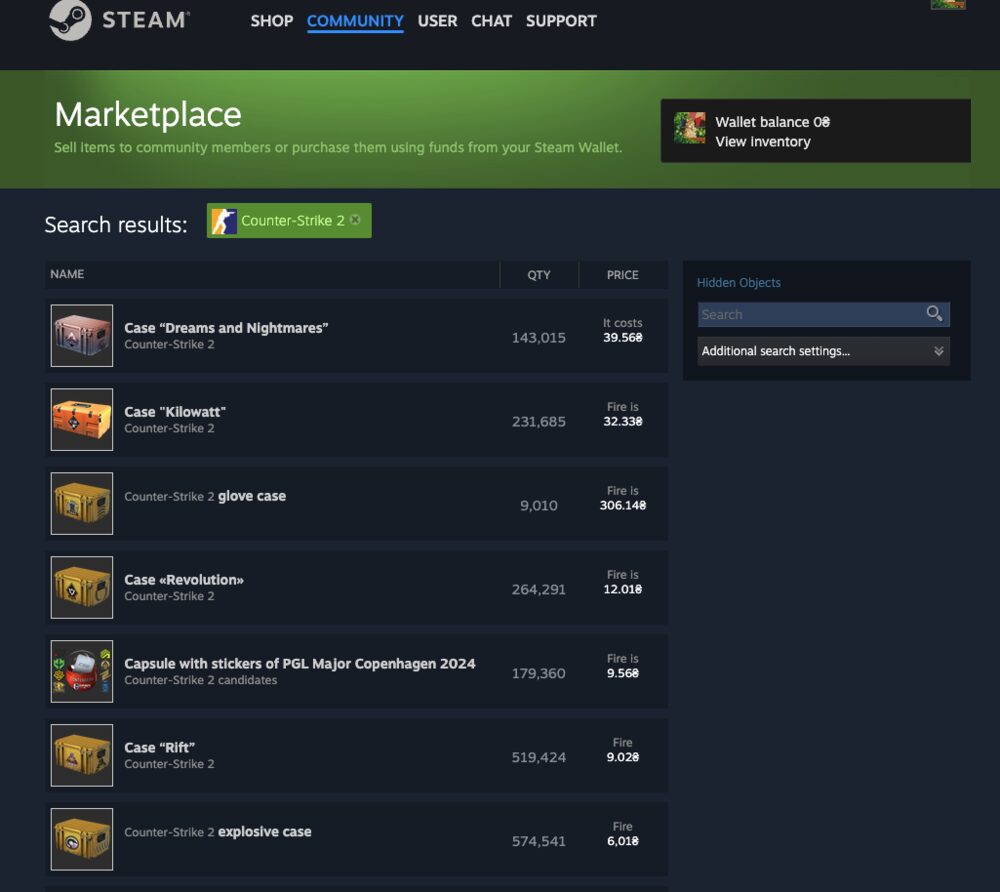
Across our own automated cash-market purchases, the average gap to same-day Steam prices has been ~36%, with the deepest discounts on commodity items like cases and thinner ones on hyped liquid skins — the measured breakdown has category detail. Note the direction of use, too: the premium also means Steam is a good place to sell (if you can use the credit) and a bad place to buy — one of several asymmetries covered in Steam vs cash buying.
When paying the premium is rational
- You're spending locked credit. Wallet money has no alternative use outside Steam. Its "cost" is sunk; buying skins with it at Steam prices can be perfectly sensible.
- You're selling into it. If you accumulate off-Steam at cash prices and your exit is wallet credit you'll genuinely spend, the premium works for you on the way out.
- Trade-hold convenience on tiny amounts. For a $2 impulse buy, the absolute cost of the premium is cents and Steam's one-click flow is frictionless. Fine. Just don't let the habit scale.
Everything else — buying with fresh card or bank money at Steam prices — is donating roughly a third of your budget to a structural toll you could walk around in sixty seconds: compare, then buy at the cash price. If you want the walk-around ready-made, the cs2stack marketplace shows each item's Steam price and best cash price side by side.