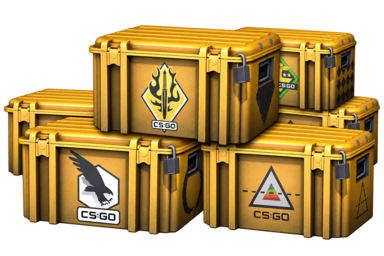
Where to Buy CS2 Cases Cheapest: the Commodity Playbook
Cases are the purest commodity in CS2: no float, no pattern, no stickers — every sealed Kilowatt Case on Earth is the same item. That deletes every reason to prefer one venue except price after fees, and it makes cases the easiest place in the whole market to buy well or badly. The spread between the best and worst way to buy the same case is routinely a third of the price.
No quality axis means one question: cheapest where?
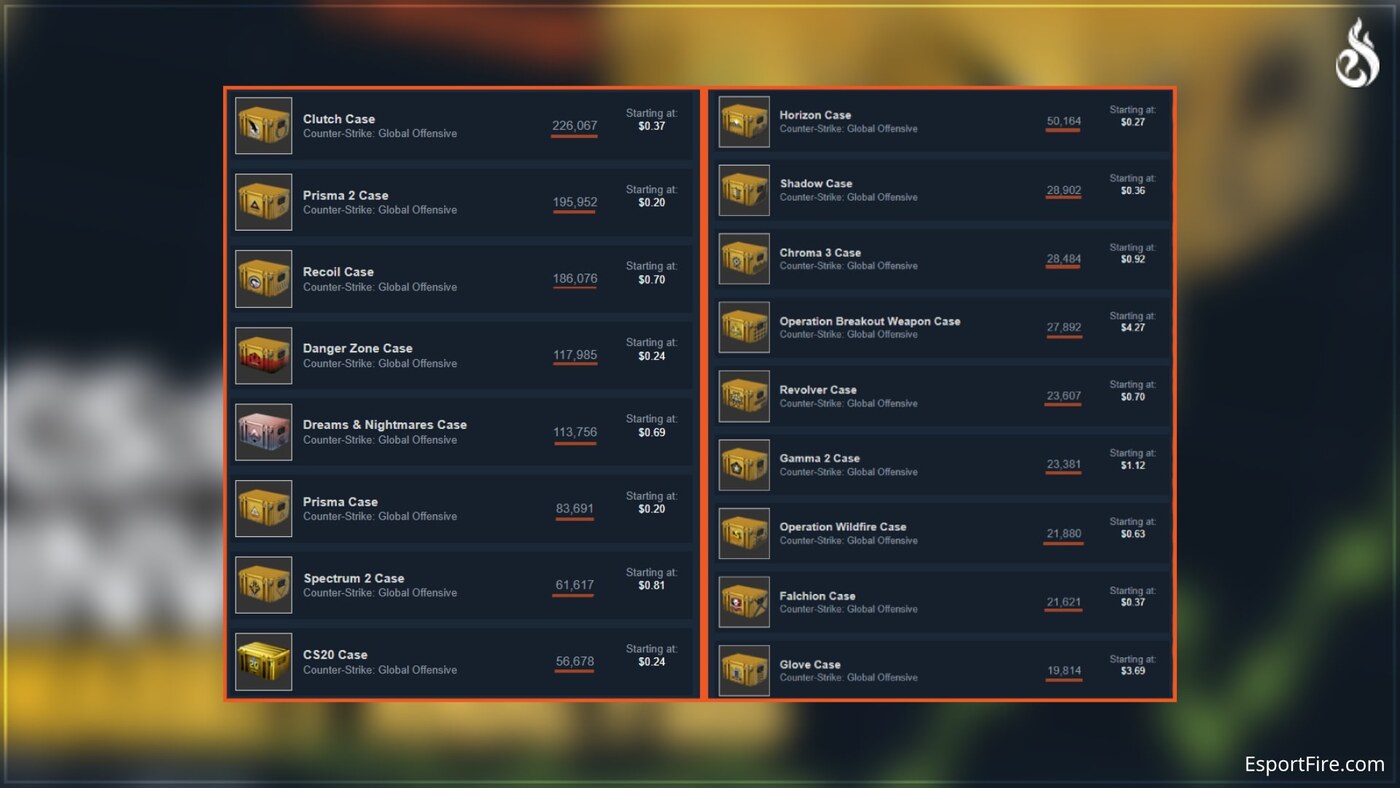
With skins, a cheaper listing might mean a worse float. With cases there is no "worse" — so the buying decision collapses to a single comparison. And that comparison has a persistent shape: in our daily cross-market snapshot, cases sit routinely ~30–40% below their Steam price on third-party venues — day after day, the deepest discount of any item category. A case Steam sells at $1.56 shows up near $0.97 elsewhere; a $0.36 case near $0.27. (Why cases specifically? Sellers unload them in bulk for cash, supply is deep, and Steam's locked-wallet premium hits hardest exactly where sellers most want real money — the category-by-category picture has the details.)
The flat-fee trap, worked out
Cases are cheap per unit, which makes them the item class where flat payment fees do the most damage. Concrete example from our own fee table at the time of writing: a case listed at $0.11 on a venue charging 3.5% + $0.15 by card costs $0.26 at checkout — a 136% surcharge — while a $0.12 listing on a venue with a pure 2.8% card fee costs $0.123. The "more expensive" sticker wins by half. The ranking of venues literally inverts below a couple of dollars, which is why comparing effective prices matters more for cases than for anything else you'll buy.
| Scenario ($0.11 vs $0.12 case) | Checkout total |
|---|---|
| Cheaper sticker + 3.5% + $0.15 flat | $0.26 |
| Pricier sticker + 2.8%, no flat | $0.12 |
Two escapes: buy in batches (one $10 checkout amortizes the flat fee across 40 cases), or fund a venue balance once by bank transfer and let purchases draw on it with no per-buy surcharge.
Which venues, in practice
The honest answer is "it rotates". Bulk-feed venues with deep case inventories — the on-site-inventory crowd — tend to hold the lowest case prices most days, but the specific winner changes with their sellers' deposit flows, and no venue is cheapest for every case at once. This is measurably true: scan ten cases on the cs2stack marketplace grid and you'll usually see three or four different venues wearing the best-price badge — cases are exactly the category where a free cross-market search pays for itself fastest. The durable strategy isn't a venue, it's a habit — compare every time, because the answer yesterday isn't the answer today.
Stacking cases specifically
If you're buying cases as an accumulation strategy rather than to open them, quantity is the whole point — and buying ~35% cheaper means ~50% more cases for the same money, which compounds through the entire life of the position. Consistency beats timing here: a fixed budget on a schedule, always executed at the day's cheapest venue, is the boring engine behind automated case stacking. Mind the classics while you're at it: not all cheap cases are equal, and drop-pool changes move the list.
The checklist
- Compare the exact case across venues — sticker and fees for your payment method.
- Batch small buys; never pay a flat fee on a single sub-$1 case.
- Big volume? Pre-fund by bank transfer where it's free and draw down.
- Recurring buyer? Automate the comparison and the schedule; the edge is in doing it every day, not doing it once brilliantly.