
Marketplace Loyalty Is Costing You Money
Ask a skin buyer where they shop and most will name one venue, with feeling. The account is set up, the balance is loaded, the interface is familiar, nothing has ever gone wrong. All good reasons to trust a marketplace — none of them a reason to believe it has the lowest price on the thing you're buying today. It almost certainly doesn't, at least not every time. Venue loyalty is the most expensive habit in skin buying precisely because it never presents a bill.
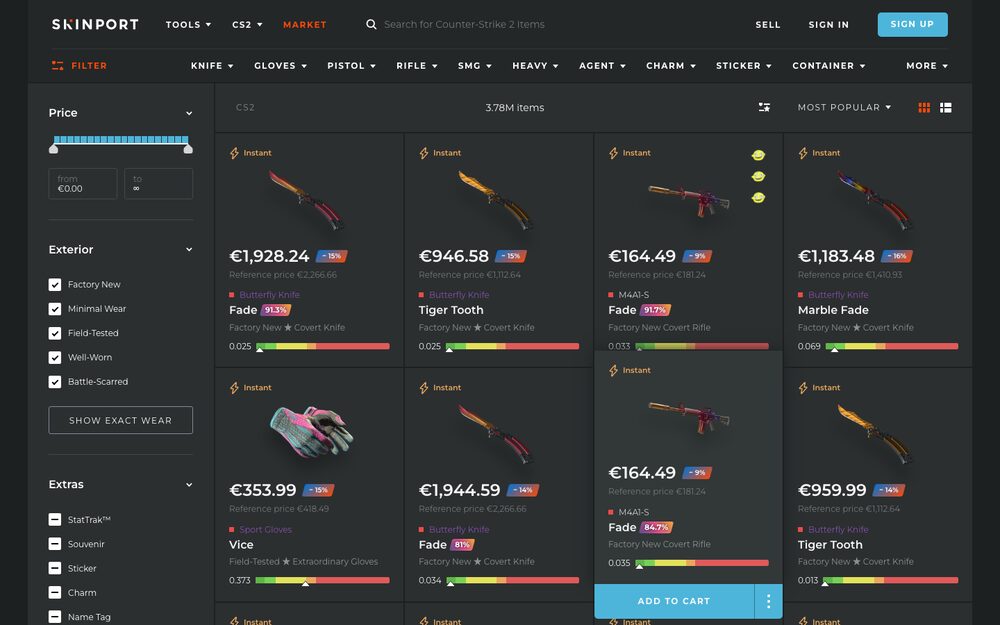
Why no venue can be cheapest for everything
Marketplaces don't share sellers or order books. Each venue's lowest listing on a given item is whatever its own most motivated seller asked for that day — which makes "which venue is cheapest" a per-item, per-day lottery. In our cross-market data the winning venue changes constantly: one venue wins today's Kilowatt Cases, another wins the Redlines, a EUR venue wins whatever its German sellers overstocked this week. The dispersion piece shows a typical day's spread on one skin: 25–40% top to bottom, with the mid-venue gaps at 5–15%. Loyalty means accepting your venue's position in that shuffle, sight unseen, on every purchase.
The tax, roughly quantified
Be conservative and say your favourite venue is genuinely good — among the cheapest on most items, and only 4–6% off the winner on average once fees are counted. On $1,000 of yearly purchases that's $40–60 donated to habit. Buyers who default to the Steam Market pay far more: the ~15% seller cut plus wallet lock-in keeps Steam stickers well above cash venues — our users' cross-market buys average roughly 36% below the Steam price. The loyalty tax scales perfectly with your volume and compounds with none of the drama of a bad trade: no scam, no crash, just a few percent evaporating on every click.
Why the habit forms anyway
- Setup friction. KYC, payment methods, and deposited balances anchor you where you already are — a loaded wallet feels free to spend and expensive to abandon.
- Trust asymmetry. You know your venue is safe; the others are question marks. Reasonable — but the big venues' safety records are all public, and comparable.
- Interface fluency. You can find anything in ten seconds on your home venue. That fluency feels like efficiency while costing you the comparison that matters.
- Survivorship memory. You remember the good deals you got there, not the better ones you never saw elsewhere.
Measure your own overpay
You don't have to take the argument on faith — audit yourself. Take your last ten purchases, note what you paid, and quote the same items across venues today (the spread structure is stable even if levels moved). Count fees per payment method, convert currencies, and see how often your venue would have won. The typical result of this exercise is "sometimes — and I'd have saved 5–10% the other times", which on reflection is the whole case. The disciplined version of the fix is the comparison workflow run before every buy; the lazy version is an aggregator that runs it for you.
Loyalty for trust, promiscuity for price
None of this says abandon your favourite venue — it says demote it from "where I buy" to "one of the places I buy". Keep your trust where it's earned; give your money to whoever is cheapest for today's item. cs2stack's marketplace makes that split effortless: one search across 10+ integrated venues, the fee-adjusted winner flagged per item, and you still complete the purchase on the venue itself — your accounts, your relationships, intact. The only thing that changes is who wins each purchase. Which was always supposed to be a competition.