
Selling CS2 Skins Safely: The Scams That Target Sellers
Buyers get scammed out of money; sellers get scammed out of inventory — and inventory scams hurt more, because there's no card issuer to call. Nearly every seller-side scam exploits the same two seconds: the moment you confirm a trade offer. Here is the threat list specific to people cashing out, and the boring sequence that makes all of it miss.
Threat one: the direct "buyer"
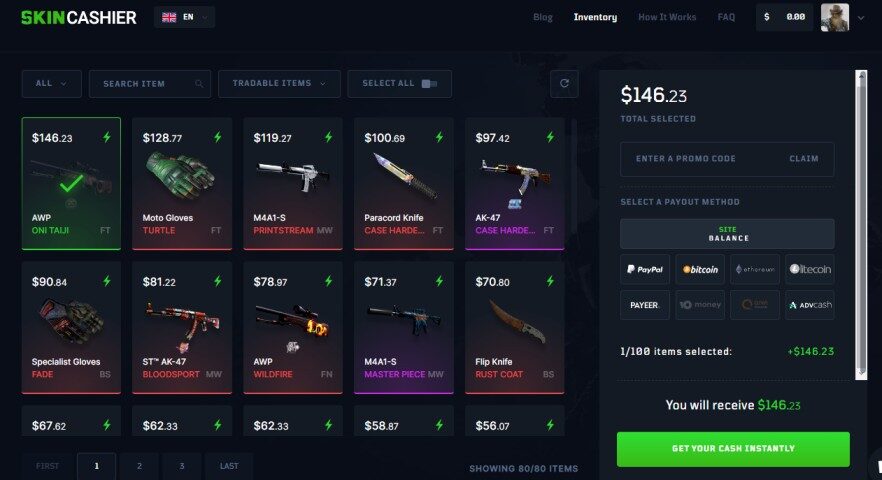
Someone messages you offering above-market for your knife — paid by PayPal, bank transfer, or crypto, "no marketplace fees for either of us." The trade is real; the payment is reversible, fake, or never comes. "Above-market" is also easy to check now: thirty seconds on a cross-market price grid tells you what the item really trades for on 10+ venues — if the DM's number is meaningfully past every one of them, you're looking at bait, not luck. PayPal disputes in particular were designed for physical goods and can be reversed weeks later, long after your item is gone. The defense is absolute: never accept direct payment from a stranger in exchange for a trade offer. A marketplace's entire job is to stand between the item and the money so neither side can cheat — that's what the commission buys. If a deal can't go through a venue, the premium being offered is the scam. The broader catalog of marketplace red flags starts from this same principle.
Threat two: impersonation
Fake "marketplace support" accounts, fake escrow bots, cloned venue websites one typo away from the real domain, Discord DMs from "staff" about a problem with your listing. Sellers are juicier targets than buyers here because sellers hold the items. Rules that cost nothing: venues don't DM you first; support never needs a trade offer to "verify" anything; type marketplace URLs yourself or use bookmarks; and treat any urgency ("your listing will be cancelled in 10 minutes") as a tell. When in doubt, log in through the site directly — never through a link someone sent.
Threat three: the API-key hijack
The nastiest one, because it automates the theft. If a phishing site captures your Steam credentials, the attacker registers your Steam Web API key. From then on, malware or their scripts can watch your trades: when you send a legitimate sale delivery, the hijacker instantly cancels it and re-sends an identical-looking offer to a lookalike account. You confirm the clone; the item exits to the thief. If you sell regularly: check steamcommunity.com/dev/apikey — if a key exists that you didn't create, revoke it, change your password, and deauthorize devices. Then confirm every delivery on the trade screen itself: exact recipient, registration date, trade history. Our guide to API keys and security for CS2 tools goes deeper.
Threat four: yourself, during a crash
Not a scam, but the same wallet damage: rushed selling. Crashes compress judgment — you accept an instant-sell quote 20% under an already-depressed market because red numbers feel like an emergency. Scammers know this too; "buyer" DMs spike in volatile weeks. If you're selling because prices are falling rather than because you planned to, read the psychology of panic selling first, and when instant-sell actually makes sense second.
The safe sequence
- Pick an established venue — track record, escrow model you understand, published fees. The safest-marketplaces roundup is a starting point; verify current state yourself.
- Secure the account first: mobile authenticator on, API key audited, email unique to Steam, no shared passwords.
- Complete KYC before listing, not after selling — verification friction with money already inside is where people get pressured into "alternatives."
- List on-platform, deliver on-platform. Every message that tries to move the deal off-venue is a no, automatically.
- Verify every trade offer on its own screen — recipient, items, nothing on your side you didn't intend. Two extra seconds, every time.
- Withdraw through the rails the venue documents, and treat first-withdrawal holding periods as normal, not alarming — the full cash-out safety walkthrough.
If it already happened
Speed limits the damage. Item sent to a fake buyer or a cloned trade: report the scam account through Steam's report flow and open a support ticket immediately — recovery isn't guaranteed and Valve's policy on restoring scammed items has hardened over the years, but a fast report can get the thief's account locked before your item is flipped onward. Credentials phished: change the password from a clean device, deauthorize everywhere, revoke the API key, check for unfamiliar trade confirmations pending on the authenticator. Payment clawed back after an off-platform deal: keep every message and receipt — the dispute process is uphill, but documentation is the only ground you have. Then do the unglamorous part: figure out which link in the sequence you skipped, because scams repeat on people who patch the loss but not the habit.
The one-line version
Sell where escrow exists, confirm what you're actually signing, and never let payment and item travel by different roads. Everything else — fees, speed, payout math — is optimization. This part is survival.