
List for $100, Receive How Much? CS2 Seller Payouts Compared
Sellers compare commission percentages the way buyers compare sticker prices — and get misled the same way. The number that matters is the last one: what lands in your account after the sale price, the commission, the withdrawal fee, and any currency conversion have each taken their turn. This is the funnel, line by line, with a framework you can apply to any venue's current numbers.
The baseline: Steam's 15% into a locked wallet
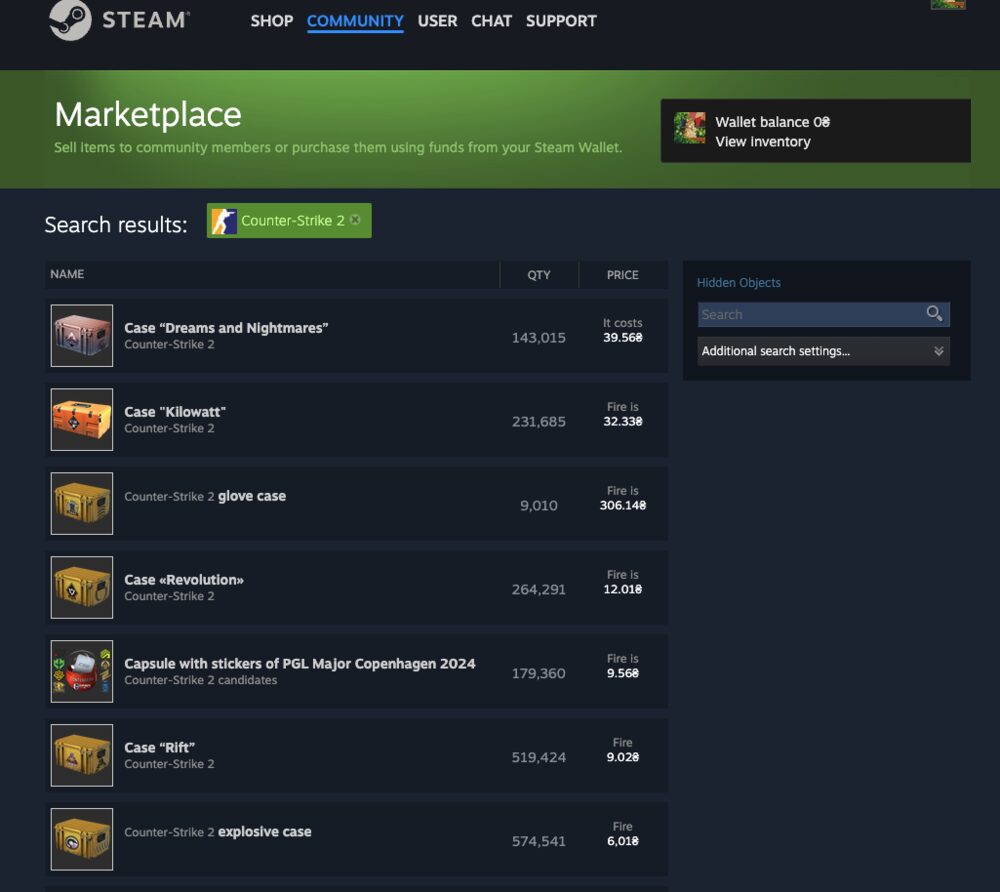
Start with the one fee structure that never changes and everyone knows: the Steam Community Market takes roughly 15% of every sale (the exact split), and the proceeds are Steam wallet balance — real for buying games, fictional for paying rent. Every cash venue is competing against that baseline, and every one of them beats it on commission. Where they differ is everything after the commission.
The four stages of the funnel
Stage one: the sale price. The biggest "fee" isn't a fee at all. Cash-market prices sit well below Steam sticker — the mirror image of buyers paying roughly a third less off-Steam. A skin that shows $100 on Steam might realistically clear $65–75 on cash venues. This haircut dwarfs every explicit fee below it, which is why pricing against cross-market reality matters more than venue choice. And there's a reason sellers routinely list below "market": the listed price only matters if someone pays it.
Stage two: the commission. Venue cuts range from low single digits to around ten percent or more, varying by venue, item class, and sometimes your seller volume — per each venue's published schedule, which changes often enough that any hardcoded number here would rot. Verify before listing. The 2026 fee comparison lines up what venues published at the time of writing.
Stage three: the withdrawal. Bank, PayPal, or crypto — each rail has its own fee, minimum, and speed (compared here). A flat withdrawal fee that's trivial on a $500 payout is brutal on a $15 one, which is an argument for batching small sales into fewer withdrawals.
Stage four: FX. Selling on a EUR-denominated venue and banking in dollars (or vice versa) inserts a conversion, either at the venue's rate or your bank's. On a $70 payout, a 2% FX spread is another $1.40 gone — small, but it's the stage everyone forgets to count.
The worked example
| Line | Steam Market | Cash venue (illustrative) |
|---|---|---|
| Steam sticker price | $100 | $100 |
| Realistic sale price | ~$100 (wallet) | ~$70 (cash market level) |
| Commission | −~15% | −5–10% (verify per venue) |
| Withdrawal + FX | impossible | −$0–3 depending on rail |
| You hold | ~$85 locked wallet | ~$60–66 cash |
The illustrative column uses hedged ranges on purpose — plug in the live numbers from the venue you're actually considering. The structure, not the digits, is the durable part: sale-price haircut first, commission second, rail cost last, in descending order of impact.
Reading the table honestly
- $85 locked beats $63 cash only if you'll spend it. The wallet number is bigger and worth less — unless Steam purchases were in your future anyway. That decision gets its own treatment in wallet vs cash.
- Commission differences are worth less than they look. Three points of commission on a $70 sale is ~$2. A better sale price from picking the venue where your item class is liquid is worth far more.
- Instant-sell adds a fifth stage. Skipping the wait costs another discount on top of everything above — the microstructure of that gap.
Batching: the quiet fee-killer
Flat costs — withdrawal fees, minimums, FX spreads with fixed components — don't care how big your payout is, which makes them regressive against small sellers. Ten $15 withdrawals can pay the flat toll ten times; one $150 withdrawal pays it once. The practical rule: let proceeds pool on the venue until a withdrawal is comfortably above the point where the flat costs fade to noise (a few percent at most), then pull. The exception is counterparty caution — venue balances are IOUs, not bank deposits, so don't let the pool grow past what you'd tolerate losing if the venue had a bad month. Between rail fees and custody risk there's a sensible middle: batch weekly or monthly, not per-sale and not per-year.
Same logic, opposite direction, for choosing what to sell: three $5 items pay three deliveries' worth of your attention and the same per-listing friction as one $300 item. When trimming a portfolio for cash, sell the big liquid pieces first and instant-dump the dust — the funnel's fixed costs make small patient sales the worst hours-per-dollar work in the hobby.
The takeaway
Chasing the lowest commission is the seller's version of the buyer chasing "0% fees": optimizing the small line while ignoring the big one. Find where your item actually clears highest — cs2stack's live grid does the first pass in one search, lining up the current lowest listing on 10+ venues so you can see which market values your item class most — then subtract the venue's current published cut, subtract the rail, and decide. If the answer disappoints, remember it's a market, not a bug; and if the timing feels wrong, maybe don't sell yet.