Where CSGO Stash Prices Come From (and What They Miss)
Every item page on CSGO Stash carries a price, and generations of players have treated that number as "what the skin costs". It's worth being precise about what it actually is: the Steam Community Market listing, on the one venue in CS2 where prices run structurally highest. That doesn't make Stash wrong — it makes the number a reference point with a known bias. Read it correctly and it's useful; read it as a going rate and you'll overvalue your inventory and overpay for your purchases.
What the number on a Stash page is
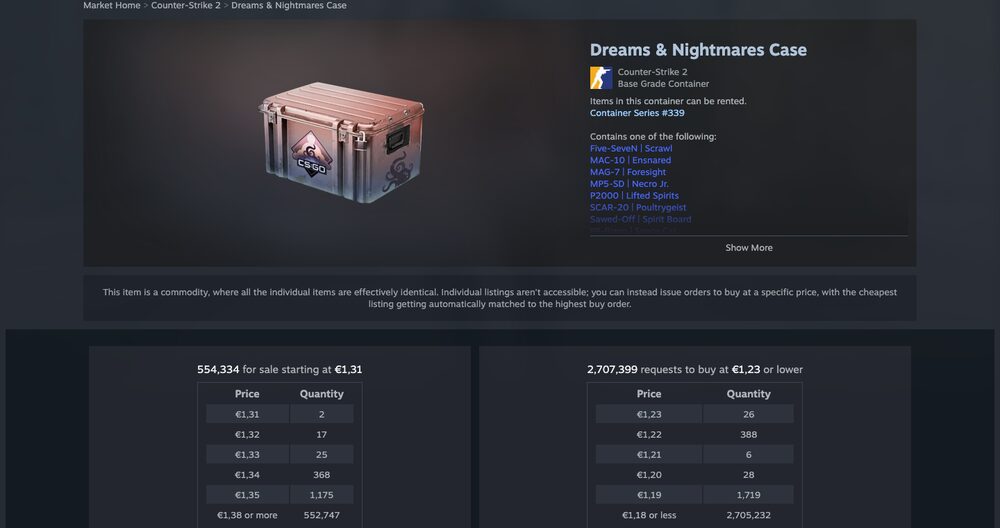
CSGO Stash is a database, not a marketplace — its price fields are pulled from the Steam Community Market and its item pages link straight to Steam listings. So when a Stash page says a Field-Tested Redline is $24, it's reporting Steam's current lowest listing (sometimes lightly cached, so it can trail the live number by a bit). That's a real, buyable price. It's also, almost always, the top of the market.
Why Steam prices run high
Two structural reasons, both permanent. First, Steam's ~15% transaction cut: a seller who nets $20.40 on Steam had to list at $24, while the same seller on a low-fee cash venue can list at $21 and net more. Second — and bigger — Steam pays sellers in wallet funds that can never be withdrawn. Money trapped in a game store is worth less than money in a bank account, and sellers price that discount in reverse: they demand more wallet dollars than they would cash dollars for the same item. Stack the two and you get the standing gap that separates Steam from the cash venues. Across everything our users buy through cross-market comparison, the average landing price is roughly 36% below Steam — with the usual caveat that the figure breathes with the market.
What that means in practice
- Valuing an inventory? Stash/Steam numbers overstate what you could cash out by a wide margin. Value at cash-venue prices minus seller fees — the cash-out paths piece has the math.
- Deciding if a skin is "worth it"? The Stash number is your ceiling, not your price. Check the cross-market quote before concluding you can't afford something — a $24 Steam skin is often a $17–19 cash skin.
- Comparing two skins? Relative Steam prices are usually a fair proxy for relative value — the bias is roughly proportional. This is where the Stash number stays genuinely useful.
- Buying wallet-rich? If you're sitting on locked Steam wallet funds from selling drops, the Steam price is your price — wallet money can't leave, so spend it there and do your cash buying elsewhere.
Bridging from Stash to the real price board
The workflow is short: take the exact item name from the Stash page — wear tier and StatTrak flag included — and run it through a cross-market search. cs2stack's marketplace returns the live lowest listing across 10+ integrated venues with fees included, plus each item's discount versus Steam, so the Stash-to-reality gap is a number on screen rather than a guess. The full step-by-step, including the classic wear-tier and Souvenir traps, is in from Stash page to checkout.
The one-line summary
CSGO Stash tells you what an item costs at the most expensive shop in town. Fine as a map, bad as a menu — check the cross-market price before any money moves.